Featured

Book Review: Demon Copperhead by Barbara Kingsolver (Kindle Edition)

Since Demon Copperhead is such a hype book (queue Oprah), I was sceptical to jump on the bandwagon for the fear of being disappointed. I can however tell you, that this book was worth every penny. Please, do yourself a favour and pick this one up. Thank you.

Demon Copperhead is a Bildungsroman, or a coming-of-age story inspired by Charles Dickens’ David Copperfield. Demon Copperhead is set in Southern Appalachia, Lee County, and is about a boy born to an addict teenage mother in a trailer. His life becomes a battle with abandonment, death, addiction, foster care and love – the good and the bad sort.

The first thing that caught my attention was the unique writing style, the voice of the protagonist Demon, real name Damon Fields. Every other page, I found myself highlighting a quote, laughing out loud or smiling. Try this one on and see for yourself: “It was hot as hell in there, and crowded with knickknacks and whatnots all over the place. Big old clocks on the mantel, and I’m saying more than one. If you wasted this lady’s time, she was going to know it.” (Page 288) and “She asked more questions, such as why Mom took up with such a bad apple after my father died. I could think of a few answers, starting with Mom having shit for brains, but due to politeness I just said lonesome I guess.” (Page 237). There is humour in each sentence, balanced well with bits that make you think wow, that’s actually really sad. Demon’s character is formed from the first sentence by this narrator’s voice; I instantly loved him and wanted to know his story.

This voice that Kingsolver used to tell Demon’s story stays uniform throughout the book. The story takes place over a long period of time, where Demon develops from a boy to a young man. She adjusts the voice subtly to become darker and more adult towards the end of the story, while at the same time keeping the unique language of Demon intact.

Demon’s heritage plays an important part of his voice and story, being ‘Melungeon’ and a ‘redneck’. He describes Melungeon to be a derogatory word given to a group of people from the Appalachian mountains, of mixed origin (origin including Portuguese and Cherokee). This group eventually turned the negative connotations of the term around and started using it as a term of pride (Page 313). He describes rednecks as “Twenty thousand guys from all over these mountains, fighting in regiments. They wore red bandannas on their necks to show they were all on the same side, working men…people calling us rednecks, that goes back to the red bandannas. Redneck is badass.” (Page 325). These cultures are very foreign to me, having grown up in Namibia, Africa. It was insightful and truly refreshing to read a story from the perspective of a protagonist from this area, thrown into the school setting from the late 80s and early 90s timeframe.

There were a lot of characters in the book, but the ones that really drew me in were Angus and Maggot. They were both such wonderful compliments to Demon’s life – one for stability and one to show him a mirror of his own mistakes. They truly stood out, both having such eccentric personalities. Demon’s character was also well developed and, even though at times I wanted to shake him for his stupid choices, I could understand why he made those choices.

The story itself was at times hard to take in, purely because it was painful to read what Demon was going through. He spent his entire childhood dealing with abandonment, from the moment he was born. But his character is built on resilience, choosing to laugh at the pain and make something positive out of anything. This makes the parts where Demon does break down so much harder, because you truly understand that this is a moment in the book that hit him hard. My favourite part of the book was where Demon moves out of Dori’s home and the chapter ends with him dealing with dear old forgotten Jip. This part tells so much to me about who Demon is, and how he still cares for those who have wronged him. Sorry, you’ll have to read it to understand what I’m on about.

Once we reach the halfway mark of the book, the story slows down. This was due to the story actually going well for Demon for a little while; he’d become a rising football star and had a taste of being the ‘popular kid’. At last, some stability…but of course, like a roller-coaster, we know that when things go up, they’re probably going to come back down and probably at ten times the speed.

Reading the second half of Demon’s story really did bring everything full circle for me, all the way to Devil’s Bathtub, the place his father was known to have died.

By the end of the story, all the necessary loose ends had also been tied up with a positive new adventure on the horizon.

I give this story five stars. It was an amazing read and I recommend it to anyone who enjoys stories of characters overcoming immense difficulties. If you don’t enjoy strong language or discussions about addiction, then this one is not for you. It can be considered triggering to those dealing with similar issues.
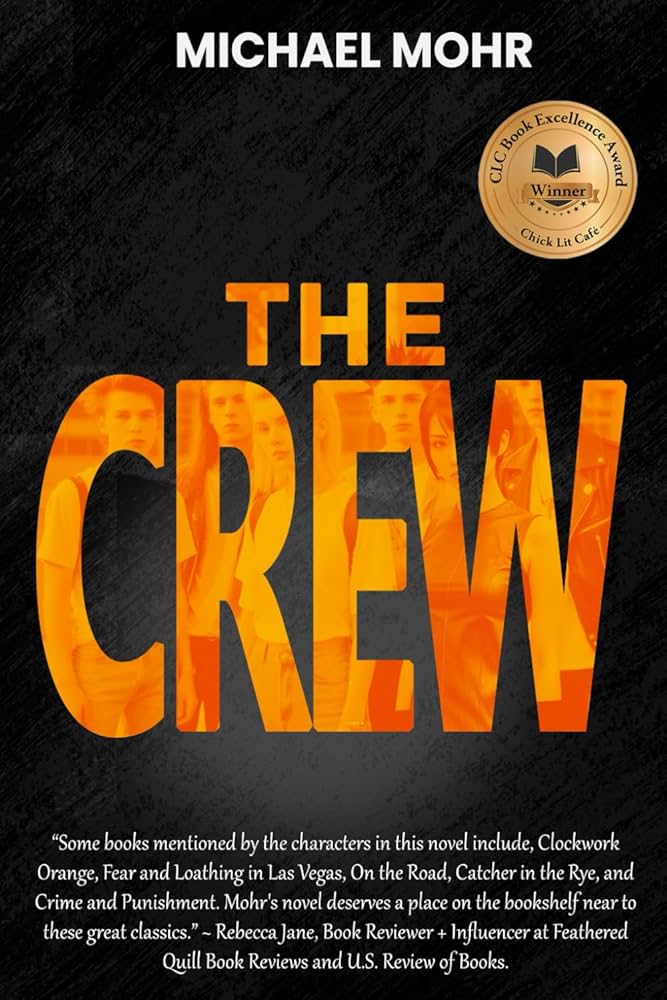
Book Review: The Crew by Michael Mohr ⭐⭐⭐⭐⭐

Review originally published on Reedsy Discovery. View it HERE.

This story is incredibly well-written, the prose including strong metaphorical language and the story’s voice shining with personality:

“The faces of the nerds I’d spent time with freshman year buzzed across my mental landscape. I wanted to hurl my fist into one of their faces. But they’d been so unbelievably kind. Compassionate my mother would probably say. Whatever. I wanted to smash their compassion.” (Page 18).

I absolutely devoured The Crew. I loved that the book included punk references—they really added to the story. Lines such as “Life replaced theory” from Crime and Punishment (Dostoevsky) gave Jack guidelines to follow in his search for emancipation from the system. Jack’s reaction to hearing these quotes, however, also shows the reader how naive Jack can be—often misunderstanding or reinterpreting these guidelines to suit his selfish needs. It made for great juxtaposition, creating the perfect flawed character.

Jack is a wonderfully complex character, who despite his mistakes, is easy to empathize with. Anyone who has gone through even a small rebellion in their life can put themselves in Jack’s proverbial Chuck Taylors. From the moment Jack—now Dog—joins The Crew, he orchestrates his transformation, carefully assessing each leg of the journey as it comes. He looks at the systems he wants to break down, then analyses the systems within The Crew to build his way up within the hierarchy.

“For me individuality was key… (to base decisions) on my own understanding, my own experience, my own examination of life, my own existential beliefs. That had…dictated everything about me as far back as I could remember.” (Page 191).

Despite his careful thinking, Jack’s naivety and lack of experience cause him to misstep; he often mistakes arrogance for power or lust for love.

“I’d metamorphosed, like I’d wanted to, only I’d become…something foreign and ugly.” (Page 162).

He is, in essence, still only a sixteen-year-old boy transitioning into the complex world of manhood.

A critique that I have toward Jack’s character is that I wish Jack’s backstory had been told in a little more detail. His need for rebellion stems from childhood issues which are only touched on briefly. Perhaps a more detailed flashback-style chapter would have brought these issues to life, helping us understand Jack even better.

The other characters in the story were vivid and added great flavor and tension to The Crew:

Cannonball appears to be a powerful new friend to Jack, yet the reader senses straightaway that their meeting has set into motion events that will not be easy to witness. Cannonball is the leader of The Crew and he’d like to keep it that way regardless of who may be hurt in the process.

Bear, who joined The Crew after Jack, serves as a mirror for Jack to assess how he himself places within The Crew’s hierarchy. When Cannonball treats Bear like a slave, Jack can see that Cannonball’s leadership stands against everything The Crew rejects; if Bear can be ordered around by Cannonball and ruled by the fear of punishment, isn’t Cannonball just another ‘fascist dictator’?

“In short, Cannon had become…the prodigal son of the system.” (Page 191).

Sarah, Jack’s love interest, was a difficult character for me to place. Her and Jack’s relationship goes from zero to a hundred very quickly, yet we know little about her. I wanted to know more. At the same time, Mohr seems to have kept information about Sarah purposefully limited, because Jack himself doesn’t care as deeply for Sarah as he thinks he does. Again, the world of romantic relationships is brand new to Jack. He has no idea what he’s doing! He seems to be in love with the idea of Sarah, not who she really is.

The Crew has a very open-ended ending. One asks: what will happen to Jack now? How will he survive and who will he turn to for help? Despite this open ending, a metamorphosis of character has clearly occurred, and the reader feels satisfied that this chapter of Jack’s story has come to a close. What I do know with certainty is that if Michael Mohr wrote The Crew 2, I would definitely be reading it.

TRIGGER WARNINGS: Drug use, References to abuse, Mild Violence, Political/Religious Views

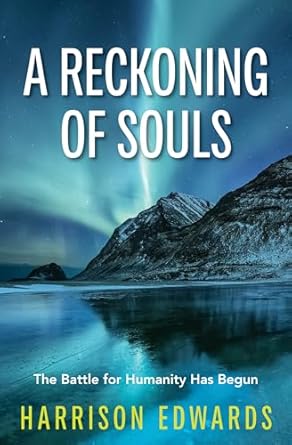
Book Review: A Reckoning of Souls by Harrison Edwards 🌟🌟🌟💫

🌟🌟🌟💫
This review was originally published on Reedsy Discovery. Read it HERE.

When fourteen people are found dead in a church via mysterious circumstances, and another string of similar deaths occur soon after, Detective Kari Salversen follows the clues until they lead her to David Skye and Jade “Epiphany” Hendrix. Little does she know that David and Epiphany are on their own hunt for a man trying to use a device from the spirit realms to change the Earth into what he believes would be a peaceful, happy world. David and Epiphany use their spiritual abilities to do their best to save the world. A Reckoning of Souls asks the important question: if you had to sacrifice eighty thousand people to potentially make the world a better place for eight million others, would you?  

This was a unique and interesting read that effortlessly blended the genres of fantasy, science-fiction and action thriller.

The writing style was concise and clear, making the complex worldbuilding easy to digest. The world that Edwards created was vivid and well thought through. It is clear a lot of research went into inventing the interesting devices and spaces present throughout the story. I particularly liked the dreamlike way the spiritual world—referred to as the Otherworlds by the characters—manifested, adding wonder and beauty to the writing. It was also wonderful that Edwards added important limitations to what is possible for the characters to accomplish via the Otherworlds, as it created tension and high-stakes throughout the plot.

The characters all stood out from each other, each having a clear voice and well-established motivations. One can tell Edwards enjoyed writing them! Epiphany was a fascinating character; it took a while for me to warm up to her, but once I did, she became my favorite. She is direct, brave, feisty and a total badass. I also really liked Johannes Stinar, the ‘crazy scientist’ of the story. He had the most moody and dry personality in all the best of ways. It was in Johannes Stinar’s scenes where one truly sees Edwards’ research shine.

My main critiques for the book, and the reason my rating isn’t higher, are as follows:

The first half of the book included a lot of exposition, as well as introductions to many new characters. While this certainly is the type of book that requires exposition well up front, it did feel dense, and it was sometimes difficult to remember all the character names. Seasoned fantasy and sci-fi readers might not mind this, but others may struggle.  

The story and characters also gained much more depth once we moved passed the exposition, meaning that the book’s first half felt a little flat compared to the final half. I enjoyed how the story came to life later on, and wished to have seen this earlier in the story.

The dialogue tended to feel forced. While one grows used to it after some time, placing a focus on creating punchy, lifelike dialogue would have elevated the story.

Overall, A Reckoning of Souls is a unique story with a fun, fast-paced plot—a definite worthwhile read at 3.75 stars.

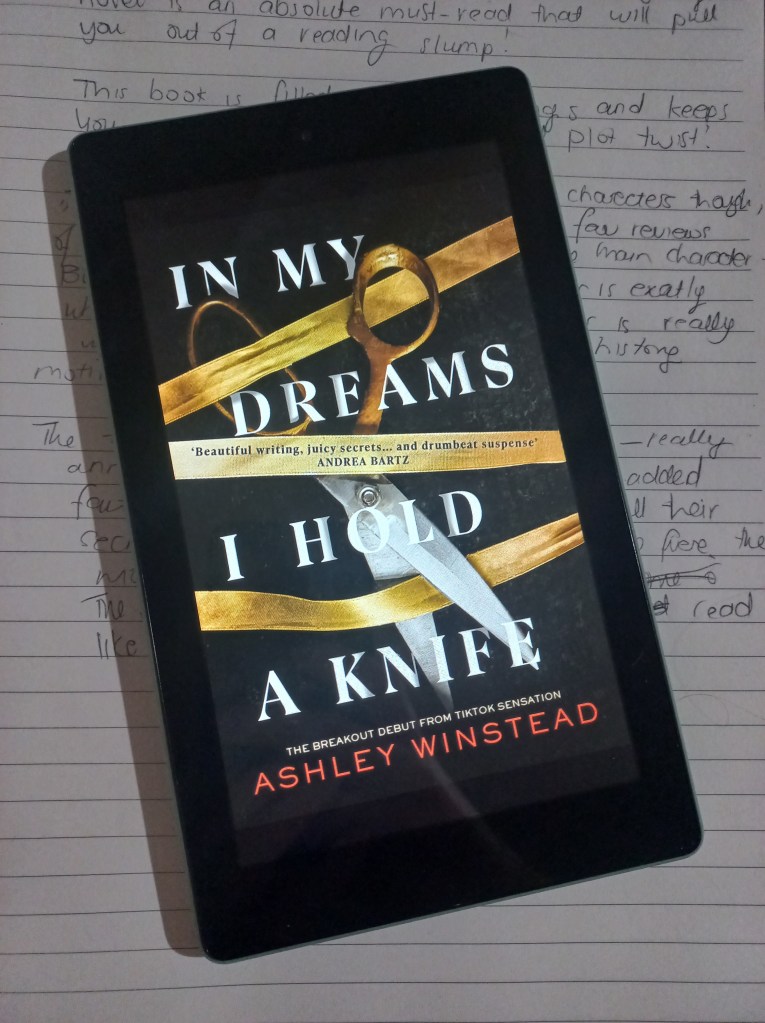
Book Review: ‘In my Dreams I Hold a Knife’ by Ashley Winstead (2021 Kindle Version)

This Secret History-inspired dark academia novel is an absolute must-read that will pull you out of a reading slump! I saw this book recommended by Lexi Aka Newlynova on YouTube and knew instantly it would be my vibe.

So, what is it all about?

Let’s get into it!

This book is filled with buckets full of red herrings and keeps you on your toes until the final plot twist. If you’re hoping for innocent, nice characters though, then this one is not for you. I’ve read a few reviews in which readers absolutely HATE Jessica. But—I think her moral greyness is exactly what makes this book so delicious and original. Jess is really well written, with clear flaws and history to motivate her terrible behaviour. Her attitude is linked clearly to events throughout her life and her strained relationship with her father.

The other characters were also intriguing—really annoying too—but they all added fantastic tension to the story with their secrets and scandals. I loved the attitudes of these depraved people. They’re all so selfish, shallow and confused, and it is GREAT:

“With all eyes on her, Heather smiled like the cat that ate the canary. ‘My parents worship the one true god.’ She spoke slowly, basking in our attention. ‘Me.’” (Page 28).

My favourite character was Coop because, next to Jess, he was the most fleshed out and the most different from the other characters. The female characters read like the same person at times, which could be confusing from scene to scene, especially with the time hops between chapters.

The prose had some really good moments, especially metaphors and similes. The paragraph here was one of my favourites:

“In the blazing glory of late August, rows of red crepe myrtles formed a sea of crimson everywhere, the ocean of colour interrupted only by gnarled magnolia trees, twisted arms reaching out with scattered white blooms, clinging late into their season. Crimson and white. Blood and spirit, like the Duquette motto: Mutantur nos es vos, corpus et animam meam. We will change you, body and soul.” (Page 18).

And this one was awesome too:

“Finally, she stood up, shuffled her pages, and gave me a smile—not a full smirk, but a knowing look, like a smirk in church clothes.” (Page 115).

The pace and plot were amazing—not a single moment of boredom! The book felt like it was the perfect length. I especially liked the final line of the book and, while I can’t quote it here for the sake of avoiding spoilers, I have to mention that it was so unconventional and satisfyingly twisty.

In my dreams I hold a knife gets 4.5 stars from me. If you haven’t read the Secret History by Donna Tartt, the book that inspired the entire dark academia genre, definitely put it on your list! Yes, it’s another one of those TikTok sensations…but this one is actually worth the hype! It’s a much slower read than In my dreams I hold a knife, but just an absolute classic that you can’t miss out on.  

Book Review: Her Fearful Symmetry by Audrey Niffenegger

I expected more from this book. The story started out so well—the first few chapters were powerful, but then the story didn’t really improve or gain much momentum from there on out.

I was pulled in by the wonderful prose of Niffenegger’s writing and, while this was held up throughout the story, the amazing writing could unfortunately not hold up the slow plot and strange character developments. I’ve read plenty of quiet books that still had wonderful character development and interesting details, but this one lost itself along the way. By the end of the story, most of the characters faced the consequences of their actions, but didn’t really learn anything.

The third person omniscient point of view, which is where the narrator has insight into the actions and thoughts of all the characters, was unique. This was the first time I read a story written in this POV. While it gave great insight into the character’s feelings, it did at times give the feeling of head hopping and was a little confusing.

I loved the setting and the scenery of the book. It made me think of Bram Stoker’s Dracula. Most of the graveyard scenes, and particularly the final one in which Valentina’s story comes to a close, were lovely, full of life and truly haunting! The scenery and vibe of the book was my favourite part of this reading experience.

Let’s have a look at the characters:

The twins, Julia and Valentina, were not very likable. Both of their personalities felt underdeveloped and, while the dynamic between them was intriguing—Valentina being timid while Julia was oppressive and fiery—the resolutions that both of them faced at the end of the story wasn’t satisfying.

The secondary characters were more interesting: Martin with his OCD, Mariyke living her new Dutch life, and Robert with his thesis, historical knowledge and general gloomcore vibe. Martin was the most fleshed out and unique character. His was also the only character arc that felt satisfying.

The biggest issue I had with this book was the HUGE age gaps between the ‘couples’. It made the men come across as creepy and stopped me from liking them despite their other good traits. I fail to see how the only two love interests for 21-year-olds in the bustling city of London could be two middle aged men. While this may be an issue of personal opinion and taste, I find it dangerous to present this idea to the young women who are the target market of this novel.

In the end, Her Fearful Symmetry gets a 3-star from me.

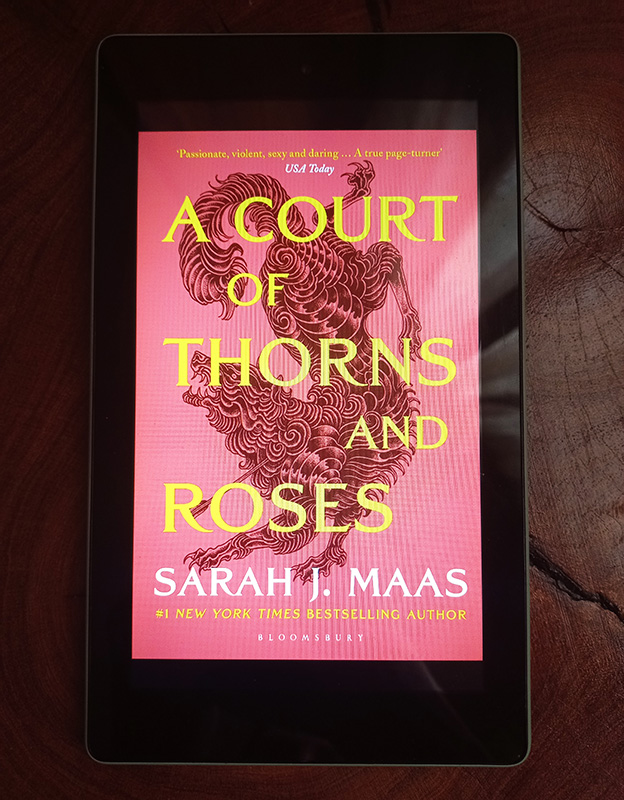
Book Review: A Court of Thorns and Roses by Sarah J. Maas (2015, Kindle Edition)

It took me a while to finally pick up this book due to it being a BookTok ‘enemies-to-lovers’ sensation—but I had to see what the hype was about! In the end, I’m glad I did. While not being the best book I’ve ever read, the first book in ACOTR opened the door to a series that is easy to lose yourself in. Book 2, A Court of Mist and Fury, was particularly exciting! While containing some questionable male behaviour (my memories recall you, Edward Cullen), and some scenes that are not PG 13 (but let’s be honest, Game of Thrones (by George R. R. Martin, 1996) perhaps had a big hand in this becoming a norm in fantasy reads), it’s worth the read and definitely an entertaining story! This is a New Adult book, so skip buying this for your teens, please, even if some book shops shelf this in the YA section.

So, what’s it all about?

So, let’s start with the characters:

Feyre was stubborn, cold, submissive and pampered in the first half of the book. While this made her hard to like, I feel it was necessary for her character development later on in the series. Feyre was also truly naïve at first, showing how young she was and how little she knew of true evil. This caused her to make mistakes that threatened her own life and those of others. Additionally, Feyre seemed to struggle with her purpose: when she was in the human lands, her purpose was to keep her family alive. Once she reached Prithian, Feyre seemed lost, without a goal. Thankfully, Feyre experienced a strong character arc and learned from her mistakes. Once she found her purpose she also became a more compelling character.  

Tamlin’s character was a bit flat, especially for a love interest. It would have been interesting to learn more about his thoughts and motivations earlier on in the story to make his character fuller. While he could be silly and amusing, he gave me the serious ick now and then.  

Rhys was the most interesting character to me—the High Lord of the Night Court. From the beginning, his motivations were plagued with mystery, which made me want to learn more about him. Of course, once we read Book 2, it all makes a lot more sense…hang in there!

The plot:

The first half of the book dragged a bit. It is only once all went up in flames (or rather went Under the Mountain) that the pace of the story picks up. While I’m sure the focus on romantic plot points throughout the first half is exciting to other readers, I would have preferred more action; what about all those creepy critters Feyre meets on Tamlin’s estate? Most of those scenes seemed rushed, especially since some of those creatures feature again later in the story. The second half was amazing though and convinced me to keep reading the rest of the series.

Atmosphere and setting:

I’d have loved more focus on environmental descriptions. Even though most of the story takes place in the faerie lands (which are described as being very beautiful), I wasn’t able to envision the full beauty of these spaces. Once again, this improved once we reached the second half of the book, but I’d have loved if these details were celebrated all the way throughout. This would have pushed the story to another level!

The prose:

I really disliked the repetition of words and phrases in the book (e.g. purred, a shiver spider-walked down my spine, I slept fitfully…PURRED was a serious itch for me). While the prose itself was clear with some highly insightful phrases, a little more focus on editing out these repetitive words would have made the reading experience feel more sophisticated.

I enjoyed this book (particularly the second half), so it gets a 3.5 star from me. I look forward to reading the rest of the series, especially as I’ve already picked up the second book and can agree with other reviewers that the series really improves from there on out!

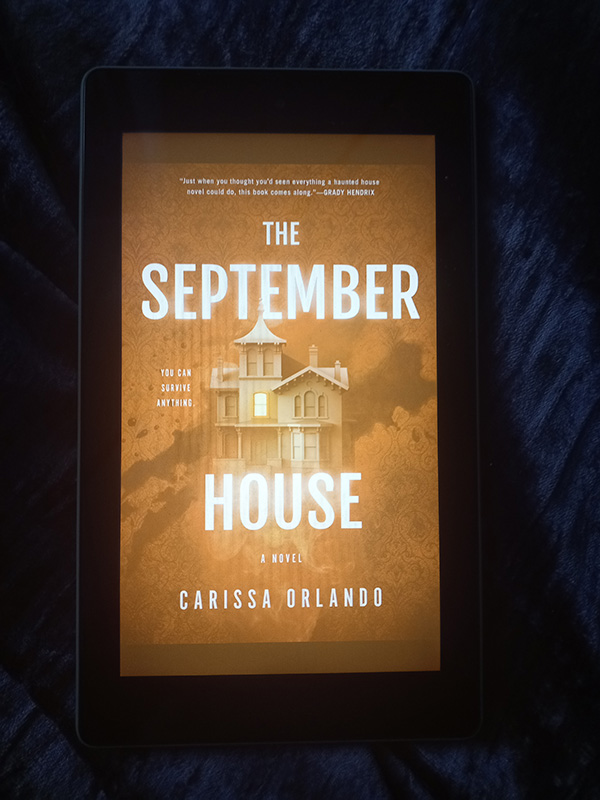
Book Review: The September House by Carissa Orlando (2023, Kindle Edition)

The September House is one of the most original thrillers I’ve read in a while. This stunning character-driven story is an emotional roller-coaster: shock, humour, fear, comfort…it has it all!

We follow the story of Margaret, who lives in a haunted house with her husband, Hal. Or at least she did, until Hal went missing. Throughout the years of their stay in the house, the couple realized that something wasn’t quite right with the beautiful Victorian mansion—what with the walls bleeding, the endless screaming at night and the unwanted ghostly visitors that would literally take a chomp out of your flesh if you gave them a chance. Eventually, the couple’s only choices were to leave the house, or make peace with it and follow the rules of the entity controlling their lives. Margaret chose the latter. When Hal goes missing, their daughter, Katherine, wants to come stay in the house to investigate her father’s strange vanishing incident…only she isn’t aware that the house is haunted, and Margaret will try everything in her power to stop her daughter from finding out.

What stood out to me while reading The September House was the amazing character work. The three main characters are Margaret, Katherine and Fredericka:

Margaret could be a truly frustrating character at times—but for valid reasons. Her voice was balanced and well-developed, with well-placed humour combined with a sad reality of loneliness and trauma. Watching her process her ever-changing environment and the changes in herself was fascinating, making her feel so very realistic. It is especially interesting watching her live in denial, building coping mechanisms that the reader sees straight through:

“This house was everything I’d ever wanted. Sure, it wasn’t perfect, but sometimes it actually was. Or at least as close as anything could come to perfect in this life, which admittedly was not very close…I knew how to survive here, and I always had the sense that if…I just played by the rules well enough, I could make it into a perfect home…I loved this house. And you didn’t give up on the things you loved.”

Page 191

Katherine was so annoying—in a good way! She helped drive the plot forward by placing constant conflict in her mother’s life, forcing Margaret to question her beliefs and the lies to tells herself to survive. It was Katherine’s character arc that felt the strongest in the end.

Fredericka was my favourite character, adding fun and a good deal of sarcasm to the story. I still catch myself thinking “Needs must when the devil drives” (Page 16) whenever an unpleasant situation that I cannot avoid arises.

The story setting was FANTASTIC. Bleeding walls? Victorian décor? Ghosts who snap and love and murder? Hell yes! The setting contributed wonderfully to the overall moodiness and creepy vibes of the book.

As for the plot: creative, unpredictable and filled with strong moral codes. I really enjoyed the pace of the story; it built up to an utterly wild ride towards the end. Those last few chapters were hectic in all the best ways!

What I loved and appreciated most about this book is the theme of finding beauty in darkness:

“A leopard cannot change his spots,” she (Fredericka) said before moving into the living room to fluff the pillows.

“Can’t imagine why he’d want to,” I (Margaret) thought. “The spots are part of what makes leopards so beautiful.”

Page 106

The September House inspires one to carry on despite difficult situations, but also evokes a warning of becoming too comfortable with the darkness.

5 stars and one of my new favourite books!

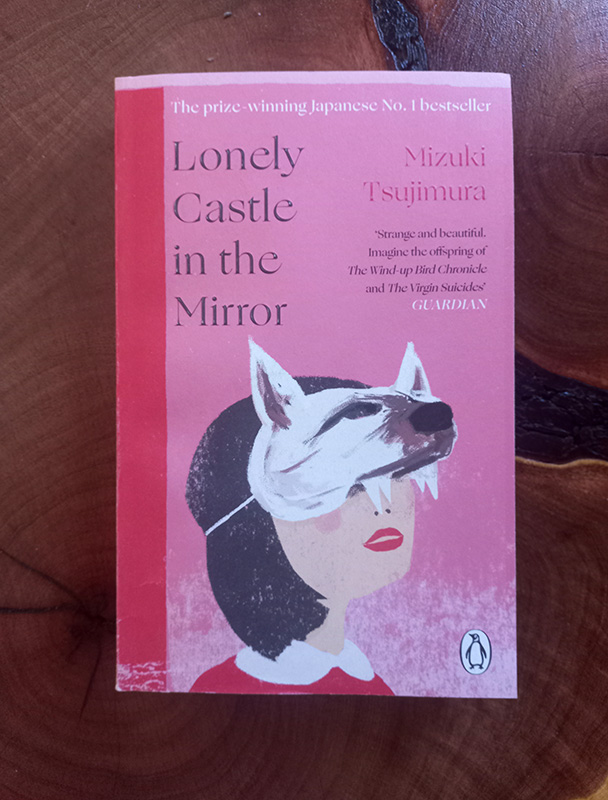
Book Review: Lonely Castle in the Mirror by Mizuki Tsuijimura (Penguin Paperback Edition 2022)

Lonely Castle in the Mirror is an endearing read that had me wiping away tears as the story came to a close. While it took a while to decipher the story mystery, once one reaches the final chapters the story comes together so well and all the hidden pieces puzzle together perfectly. This book was insightful and, as a book aimed at a young adult audience, had some great lessons to teach to children who struggle with bullying.

The book had a few major positive points, while also having a few negatives:

The main character, Kokoro, was sweet and relatable. Her journey was well-written, and her growth from a shy, lonely girl, to one with confidence and a future to look forward to, left a wonderful positive message for other young people who might be in similar situations. Her journey, along with Aki’s journey, encourages children to push past the things they can’t control as children, letting them understand that it’s safe to grow up—they can take charge of their lives and push past their troubles (page 354).

While the other characters in this story weren’t super deep, I did find each of their stories very compelling. I’d have liked to see a little more of each character’s backstory. Because the characters weren’t deeply developed, I tended to confuse them – especially the boys—with one another. The boy who stood out most was Rion; let me just say his story is intense. I loved learning about him and how his story was interwoven with the stories of the other children.

Furthermore, I liked that the book broke down the children’s names into the language characters to give more insight into their Japanese meanings:

“I’m Rion,” the handsome boy said next. “People tell me it sounds like a foreign name, but I’m Japanese. It’s written with the ri in rika, science, and the on that means sound…”

Page 37

How the relationships were explained with the additional ‘chan’, ‘senpai’ and so on, was very interesting. It’s the first time I’ve read a book where this was explained so well. These additions were also used as a clever device to demonstrate how the characters feel about each other, considering themselves either familiar/unfamiliar or inferior/superior to their peers, like on page 59:

“Hi, Aki-senpai,” she said.
At which Masamune burst out laughing.
“Jeez, this isn’t some school club, what’s with the senpai?”
“OK, OK—so what should I call her?”
“I don’t mind what you call me—just plain Aki, or Aki-chan—it’s all good. I find it kind of endearing that you’re so polite, Kokoro.”

Page 59

The worldbuilding and overall concept of the story were so original and well thought out. While I wish the atmosphere was a bit more developed—it didn’t always feel like the castle was that different to everyday life—I did like that the characters made the castle their own little safe space and ‘forged’ their environment to suit their individual needs.

One last thing that was a bit strange was the perspective shift at the end of the book. Lonely Castle in the Mirror is written from Kokoro’s perspective, but then it switches to one of the other characters at the end. While the ‘reveal’ really connected the story well, it might have been more useful to introduce the other character’s perspective here and there earlier on in the story so that this didn’t feel so unexpected.

This was a 3.8 star for me. Overall, I really enjoyed it and feel this story is worth a read. In general, I just wanted a bit more: more character, more atmosphere, more magic. I also wish I could have read the book in its original Japanese (I’ll get there one day!) because the translation, especially at the beginning, made the prose feel a little stiff. I think this took away from the magical feeling of the story. Because of this, I struggled to get into the story at first, but it was worth it once I pushed on.

If you enjoy sweet books by Japanese authors, you can check out The Travelling Cat Chronicles by Hiro Arikawa. It was my favourite book of 2022 and I really wish I could read it again for the first time!

My Favourite Online Stories & Poems

This is a collection of stories that have stuck with me through time. They are wonderful and I’d love to share them with you. Comment your favourite stories below so that I can check them out!

I Cleaned the – by Kanya D’Almeida (Winner of the 2021 Commonwealth Short Story Prize) posted on Adda Literary Magazine’s Page.

I cleaned the- is available HERE. A moving story about caring for the vulnerable.

Cherry and Jane in the Garden of Eden and Solarium – by Shaelin Bishop.

Cherry and Jane in the garden of Eden is available HERE. It is both a strange and sad story about a woman who not only lies to others, but also to herself.

Solarium is available HERE. This story probably has the best atmosphere I’ve ever read. A masterpiece.

Pink Flower – by Jennifer Dickinson, available HERE.

A gentle and humorous story about womanhood and the expectations placed on us as we grow older. Should age mean the death of fun?

Do not go gentle into that good night – Dylan Thomas: https://poets.org/poem/do-not-go-gentle-good-night

A poem celebrating life in the face of death.

The drunken boat – Arthur Rimbaud: https://www.poetryfoundation.org/poems/55036/the-drunken-boat

A poem about a restless boat wanting to go out to see the world on its own.

Book Review: Next Stop, Boston by Iris Dorbian (2023 Kindle Edition)

Any teenager would love to tour with a famous rockstar, right? Well, maybe not. A unique story told through the world of rock and roll.

Sex, drugs and rock and roll—that is the lifestyle of Dez Deacon, the banished lead singer of the once successful Prophets, a hit American rock band. Then, in sweeps the responsible, kind Michelle, a gorgeous and successful model, whom Dez is immediately smitten with—so much so that they are soon engaged. Geri, Michelle’s sixteen-year-old sister (and also Michelle’s ward), is forced to adapt to a new person keeping Michelle’s attention. When a car accident kills Michelle, Geri is left orphaned, and Dez is appointed her legal guardian. It doesn’t take long for Geri to realize Dez is going to be everything but a good guardian. While Dez has always been infamous for his bad attitude and hot temper, the loss of Michelle only seems to exacerbate his unhealthy lifestyle. Not wanting to give up music to look after Geri, he convinces her to drop out of school and go on tour with him to launch his solo career. What could possibly go wrong?

Next Stop, Boston was super enjoyable and well-written. It’s an addictive read that, despite being a relatively quiet novel, has a narrative flow that propels the story forward. The honesty and passion in the writing is what truly makes this story shine—no sugar coating to be found here. This is complimented with Dorbian’s meticulous research: referencing famous musicians, models, photographers and real hotels along the tour locations. Dorbian even includes a mini-tutorial on how to properly clean a guitar. It’s great!

The characters are well done. Each person stands out clearly on their own, their flaws, wants and redeeming qualities clear to the reader.

The main character, Geri, is a quiet and naïve teenager who has trouble navigating social cues. She also has severe dyslexia, which the other characters in the book misunderstand to mean that she is slow (Page 193). In Geri’s words: “He (Dez) says I’m a moron who can barely read.” (Page 124). Through the opinions of other characters in Next Stop, Boston, Dorbian successfully uses Geri’s character to highlight some of the stereotypes and misunderstandings of dyslexia, creating a wonderful space to educate readers. Other than her dyslexia and social awkwardness, Geri is a typical moody and broody teen trying to navigate a world she has no control over. She has big dreams, but is being cheated of reaching those dreams due to the inconsiderate behavior of those around her. It is easy to empathize with Geri and cheer her on, because most women will have at least once found themselves in a situation where they need to put aside the opinions of others in order to thrive.

Dez, Geri’s ‘guardian’, is a horrible person, mostly caring about himself and his music. He was an interesting insight into how too much power and fame can corrupt the human psyche. He made a very good ‘real-life’ villain.

Val Monroe, in turn, was a likable character with many good qualities. Being six years Geri’s elder, he acted as the protector and mentor that Geri so dearly needed, giving her a space to confide and grow aware of her mistreatment. There was a point when it seemed as though he and Geri might become romantically involved, but thankfully the story did not take this turn. Sadly, Val’s story felt incomplete by the novel’s ending. This was due to the events occurring in Chapter 26. This chapter threw a curveball into the book. While the perspective explored here added an interesting, extra real-life spin to the story, it might have been more successful if Dorbian had eased into it a bit more.

Next stop, Boston is a worthwhile read that those who love rock and roll and coming-of-age stories will enjoy. Just as a warning to sensitive readers: this book contains mentions and minor scenes of sexual- and drug abuse. If you find these topics triggering, then I would not recommend this book. Readers who enjoy coming-of-age stories can also check out Demon Copperhead by Barbara Kingsolver—one of my favorite 2023 reads!

Thank you Reedsy Discovery for the ARC. You can read the original review HERE.

Book Review: Paper Forests by Tegan Anderson (Kindle Edition)

Paper Forests follows the story of four children—Oliver, August, Gracie and Ansel—who wake up in a mysterious, ever-changing forest. It soon becomes clear that the children are in the forest because they are all on the verge of death, caught in purgatory. They begin to explore, hoping to find their way home, but in doing so learn that there is much more to the forest than meets the eye. The forest is ruled by a tyrant queen, Lilac Bonneville, who imprisons children to do her bidding. Oliver, August, Gracie and Ansel must decide what is more important: saving themselves or saving the children in Lilac’s clutches. At the same time, they must battle their own emotional and physical wounds spilling over from the real world—one that is slowly slipping away with every second they spend in the Paper Forest.

Paper Forests is an emotional story, filled with darkness and beauty. It has a beautiful cover that draws the reader in instantly—I will definitely pick this cover up on the shelves! The idea of the Paper Forest comes from the concept of a Paper Town:

“A fake town created by mapmakers to protect their copyright. As this forest cannot be proven to be real, it can be identified as a Paper Forest.” (Page 83).

This is a wonderful concept, which provides the story a unique premise and a fantastical setting. Tegan Anderson writes whimsical, eloquent prose, bringing the dreamscape to life.

“The soft crystals find their way into my clothes and slip down my neck and stomach, turning my skin icy. I raise a hand to shield my eyes. The wind is ferocious, and the light reflecting off the ground is blinding. All I can do is bow my head until my chin touches my chest and continue walking.” (Page 130).

In other scenes, the terror of the characters can be felt through the writing, as they fight to fend off the abominations created by the mind of the tyrant queen. The dark, misty backdrop of the story creates great tension, adding to the overall feeling of despair that sits behind the light-hearted dialogue.

The narrative itself was enjoyable and interesting, keeping the reader wondering what will happen next. While the romance aspect of the story could have been stretched out a bit more to build up the emotional tension, the pacing for the rest of the story was well done, leading up to a chilling finale and a good setup for a sequel.

The characters are interesting and complex, each with a back story that seeps into

their actions throughout the book.

Oliver, the protagonist, fights the insecurities that stem from his tragic home life and drug addiction. Little details of his life are revealed throughout the book, helping the reader piece together the life that he is fighting to return to.

August struggles with his identity, which he lost after his loved ones couldn’t accept his sexual orientation and forced their beliefs onto him. This leads to tension between him and Oliver, as August cannot fully commit to the expectations that Oliver places on him throughout their journey.

One character that could have used more development was August’s best friend, who often appears in flash backs. This is an important character who helped shape August’s identity before he arrived in the Forest, but little is revealed about this person (not even their name). More details would have helped the reader connect better to August’s past.

My main critique for this book is that the themes and writing may not fully suit the YA category. While the themes are handled carefully, I believe it is better suited to readers of at least sixteen and up. It is definitely a book that can be enjoyed by adults too.

Overall, a book worth reading that deals with important themes of identity, addiction, loss, and the meaning of masculinity in a world that still forces unrealistic expectations onto young men.

Thank you Reedsy Discovery for the ARC. You can read the original review HERE.