
‘We have no need to protect ourselves from the bad sort because WE are the bad sort . . .’
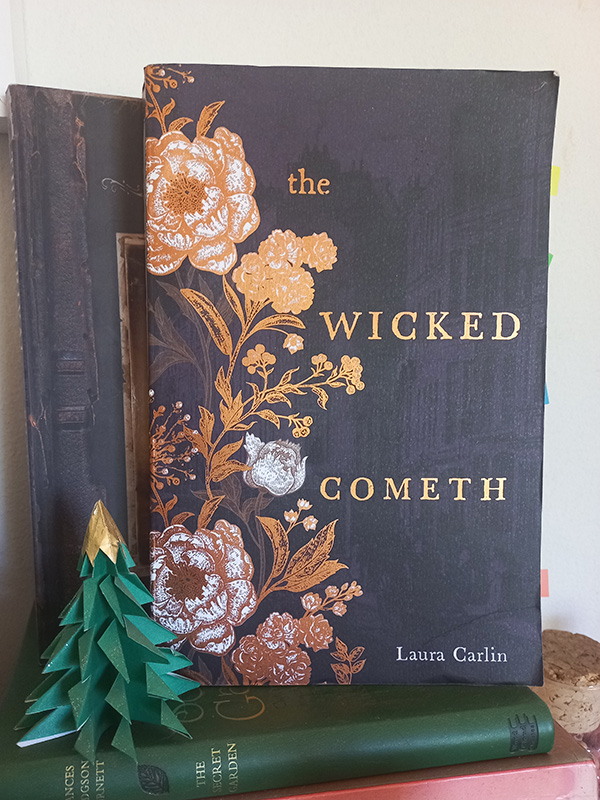
The Wicked Cometh is a gothic historical mystery novel based in the 1830’s, London, during the end of the Romantic Period and beginning of the Victorian Era. It follows the story of Hester White, who, due to the death of her parents and thereafter poor decisions taken by her foster parents, begins the story living in the slums of London. Her main wish is to escape the squalor of Virginia Row and Austin Street and make a better life for herself. She soon comes in contact with the aristocratic Brock family, who takes her in to test whether she can be educated and become a ‘worthy’ member of society, Pygmalion-style. Alongside this, there is also a mystery aspect to the story: people from the slums—those considered unimportant—are going missing. The police however, seem to be doing nothing to find the missing persons. When Hester encounters Rebekah Brock, a woman cursed with too much ‘manly’ intelligence for her uncle and brother to bear, the two begin to investigate these disappearances and a dark London underworld is revealed.
The Wicked Cometh is a highly entertaining, fast-paced book filled with history. I read it in a week—which for me, only having about an hour’s time to read before bed, is quick.
I really enjoyed the various settings of the story, from the grim streets of London to the grandeur of the Brock household. Carlin has a knack for description—I was enchanted by the sights of beauty she conjured and felt thoroughly disgusted by the scenes of horror found at the School of Morbid Anatomy and Physiology. There was a scene in which one of the experiments of the doctor is described that was more horrifying even than some of the scenes described by Stephen King. I mean, how vivid is this image?
“A sickly, rotten stench rises from the streets and the rain-bloated gutters. Some thoroughfares bulge with black mud where pools of fetid water have collected, while others are meandering.” (page 5).
Can Carlin please write a horror? I feel like I need a Carlin horror in my life.
The main characters, Hester and Rebekah, were very interesting, although they sometimes read a bit like the same person. Hester’s character stood out to me in moments where she took charge—playing the part of Annie Allsop with her London vowels. These moments really made her shine. Both Rebekah and Hester tended to be melodramatic. Hester’s actions were even creepy sometimes, overstepping privacy boundaries in order to attain information essential to the plot. These moments, including chance encounters and serendipitous eavesdropping, made the storyline feel a bit ‘convenient’ at times. The characters would risk their safety and sanity to seek out bits of information that I simply couldn’t imagine a real person doing (but at the end of the day, this is fiction).
The relationship between Hester and Rebekah was intriguing and is truly unique in this Victorian era setting. The pacing of the romance was unfortunately not perfect; it was too much too soon, and then not quite enough in the second half of the book. Despite this, it was still insightful and entertaining to read.
The plot was very exciting—I was kept on my toes until the very end. Carlin planted excellent red herrings. The subject matter—grave snatching and reanimation, along with exploitation of the poor—made for an interesting retelling of a very real and gruesome history. Let’s be honest, even the incredible Mary Shelly could not resist conjuring Frankenstein from these historical events.
The prose, while needing some tightening here and there, was smooth to read and had some beautiful paragraphs of poetic writing.
“Whether it is the style of heel the cobbler has nailed to Blister’s footwear, or my feelings towards the man, but to me his tracks are cloven hoofs and a forked tail, and I wonder if we are following the devil himself.” (Page 217).
Overall, a 4-star read for me (Amazon rating 3.8 and Goodreads rating 3.4). The book was thoroughly enjoyable and an admirable first novel for Carlin. I would certainly recommend it as a light read if you enjoy a bit of gore.
 Maan Atelier